
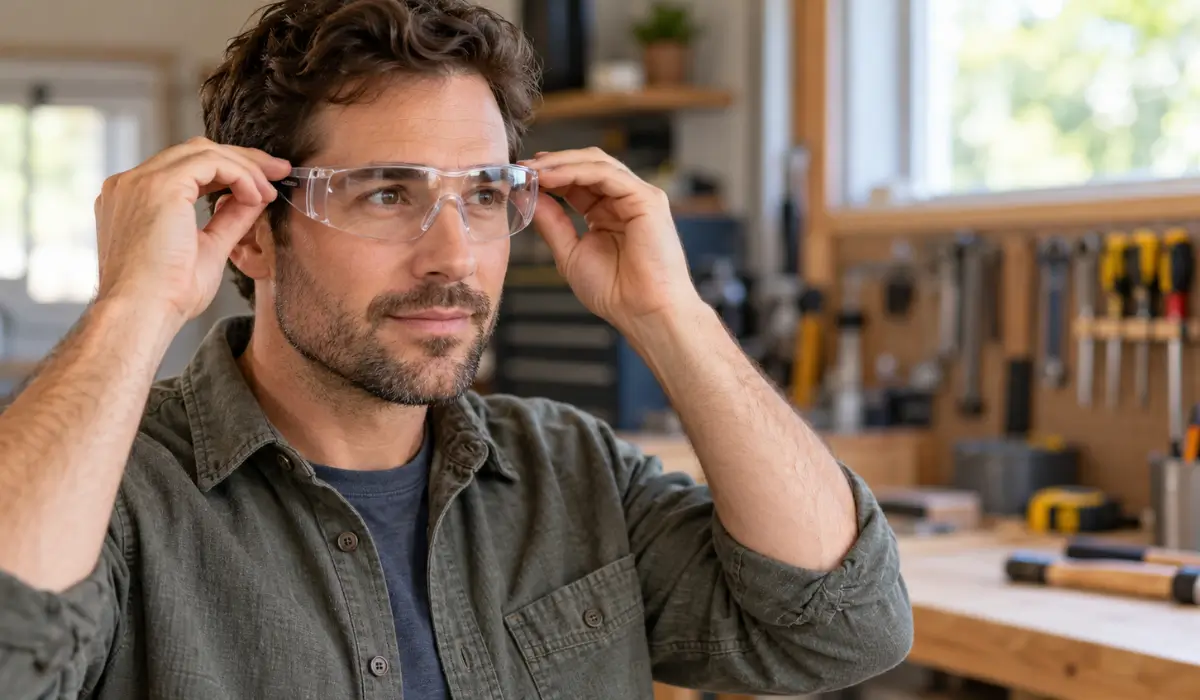
October is Eye Injury Prevention Month: What You Should Know
Many eye injuries can be reduced with protection suited to the activity, but first aid depends on the injury. Chemical splashes, loose particles, blunt impacts, and embedded objects require different responses.
DeCarlo Optometry Placentia wants patients to recognize everyday risks, eye trauma signs, and symptoms that may require medical care. Eye injury prevention starts before an accident by identifying hazards and choosing suitable protection. After an injury, knowing what happened can help determine the safest next step.
Where Do Common Eye Injuries Happen?
Eye injuries can happen during everyday activities in the home, workplace, or recreational settings. Tools, chemicals, flying debris, and direct impacts can put the eyes in danger with little warning.
Common situations include:
- Home repairs: Drilling, cutting, sanding, and hammering can send debris toward the face.
- Yard work: Mowers and trimmers may throw stones, dirt, and plant material.
- Chemicals and cleaners: Sprays and liquids can splash into the eyes.
- Workplace tasks: Dust, particles, chemicals, and other hazards may require specific protection.
- Recreation: Fast-moving objects and physical contact can cause eye trauma.
- Fireworks and projectiles: Fast-moving or exploding objects can cause serious injuries.
Workplace risks vary by job. OSHA outlines eye and face protection requirements, while our occupational eye safety information covers practical ways to reduce job-related eye risks.
Which Eye Injuries Need Emergency Care?
Some eye injuries need emergency medical care even when little damage is visible. Seek emergency medical care for:
- Sudden vision loss or a major vision change.
- An embedded or penetrating object.
- Severe chemical exposure.
- Significant blunt trauma.
- Severe eye pain.
- Blood in or around the eye.
- A newly abnormal-looking pupil.
- Marked sensitivity to light after an injury.
Blurriness, double vision, flashes, missing areas of vision, or another sudden visual change can also be concerning. These eye trauma signs may point to damage beyond the eye’s surface.
Redness needs context because minor irritation and more serious problems can look similar early on. Our information about red-eye causes and warning signs can help you recognize symptoms that deserve closer attention.
Eye Injury First Aid: What to Do and What Not to Do
The appropriate first step depends on the type of eye injury. The American Academy of Ophthalmology publishes eye injury first-aid information covering several types of eye injuries.
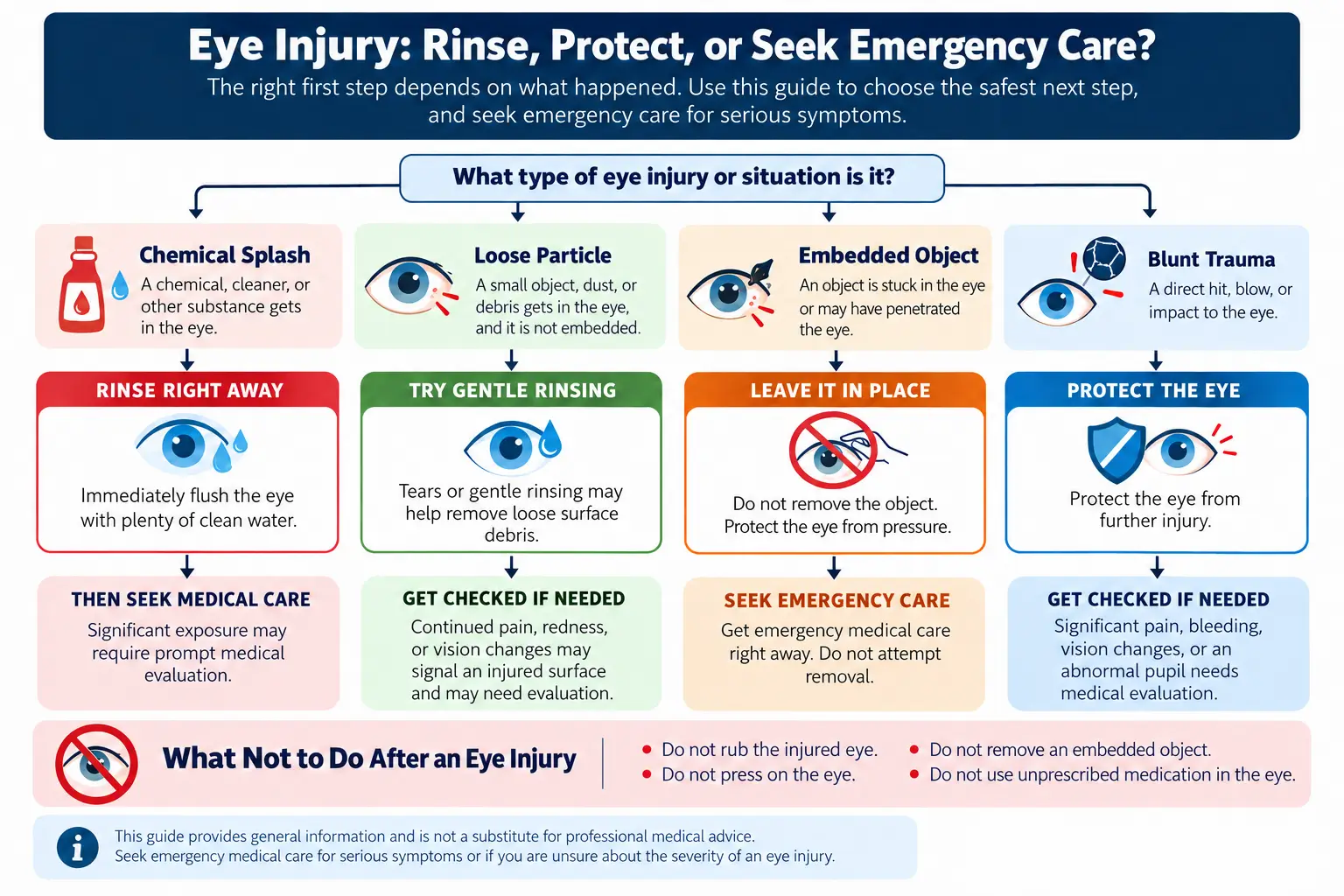
Use this quick reference to understand the immediate response for common eye injuries and actions that may make the injury worse.
| Type of Eye Injury | What to Do | What Not to Do |
|---|---|---|
| Chemical splash | Rinse the eye immediately with plenty of clean water. Significant exposure may require prompt medical evaluation. | Do not rub the injured eye or use unprescribed medication. |
| Loose particle | Try gentle rinsing to remove loose surface debris. Continued pain, redness, or vision changes may signal an injured surface and should be evaluated. | Do not rub the eye or try to dig out material that does not rinse away. |
| Embedded or penetrating object | Leave the object in place and seek emergency medical care right away. Protect the eye from further injury while getting care. | Do not remove the object or press on the injured eye. |
| Blunt trauma | Protect the eye from further injury. Significant pain, bleeding, vision changes, or an abnormal-looking pupil may require medical evaluation. | Do not press on the injured eye. |
Eye injury prevention includes knowing the limits of home first aid. Severe pain, vision changes, penetrating trauma, or serious chemical exposure may require medical care.
Eye Injury Prevention for Home and Work
Good home eye safety starts with identifying what could reach your eyes. Everyday prescription glasses and sunglasses may not provide the protection needed for flying debris, chemical splashes, or impact.
Use these safety eyewear tips to reduce common risks:
- Match protection to the hazard. Use suitable goggles or protective eyewear for cutting, drilling, grinding, mowing, trimming, and similar activities.
- Handle chemicals carefully. Follow product directions, point sprays away from your face, and use suitable protection when splashes are possible.
- Reduce household risks. Keep chemicals, sharp objects, and other hazards away from children.
- Use required workplace PPE. Eye and face protection should match the hazards involved in the job.
Patients who wear prescription lenses may also need vision correction in their protective eyewear. Our safety eyewear options can help patients consider vision-correction needs while selecting protection appropriate for the activity and specific hazard.
Sports Eye Protection
Balls, racquets, sticks, fingers, and player contact can injure the eyes during athletic activities. Regular eyeglasses may not be designed to withstand these impacts.
Sport-specific protective eyewear may use impact-resistant frames and lenses, with prescription options available for some activities. A secure fit helps the eyewear remain properly positioned during movement.
A current prescription can help identify your vision-correction needs before considering prescription protective eyewear. Our comprehensive eye exams can establish your current vision needs.
FAQ
What if my eye looks normal after being hit?
Appearance alone cannot show how serious an injury is. Pain, vision changes, bleeding, strong light sensitivity, or an abnormal-looking pupil may require medical attention.
Can prescription lenses be used with protective eyewear?
Prescription options may be available for some protective eyewear. The appropriate option depends on your vision needs, the activity, and the type of protection required.
When should ongoing discomfort after an eye injury be checked?
Persistent pain, redness, vision changes, light sensitivity, or other symptoms that do not improve may need professional evaluation. Sudden vision loss, penetrating trauma, severe chemical exposure, or other serious symptoms may require emergency medical care.
Get Appropriate Care After an Eye Injury
Some eye injuries require emergency care, while lingering non-emergency symptoms may still warrant professional evaluation.
Dr. Michael P. DeCarlo has provided eye care since 1989. For a non-emergency eye concern after an injury, our Placentia office can help determine the appropriate next step based on the care available in our office.